Moving Furniture Around Might Be the Self-Care Ritual You've Been Skipping
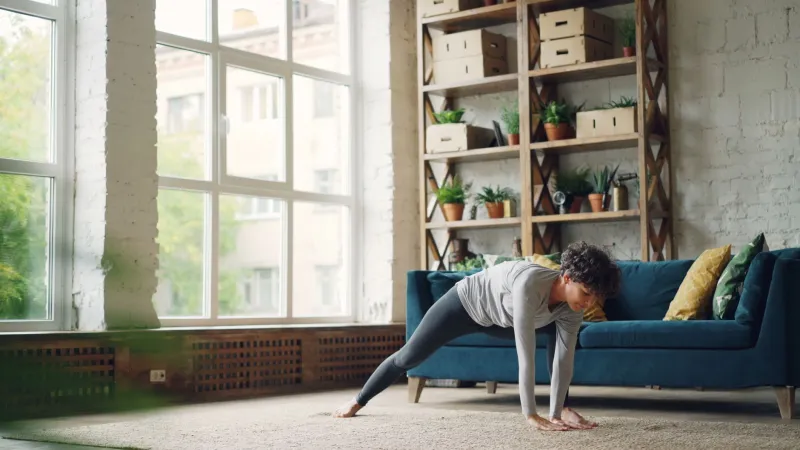
There's a very specific kind of Saturday afternoon energy — you know the one. You're restless, a little low, maybe coming off a hard week or a gray stretch of weather. And suddenly, for no completely logical reason, you decide to move the couch.
You drag it across the room. You step back. You move the lamp. You rearrange the books on the shelf. And two hours later, the room looks different — maybe not dramatically so — but you feel noticeably better.
This isn't just a quirk. It's not even just a distraction. There's a growing body of research in environmental psychology suggesting that intentional changes to your physical space can produce real, measurable shifts in mood, anxiety levels, and cognitive function. And unlike a lot of wellness trends, this one costs nothing and requires only what you already own.
Your Home Is a Feedback Loop
Here's the core idea: your environment and your emotional state are in constant conversation. The layout of your home sends signals to your brain about what kind of space you're in, what you should be doing, and how safe or stimulated you should feel. When that environment becomes too familiar — too static, too cluttered, or misaligned with where you are mentally — it can start to feel like a trap rather than a refuge.
Environmental psychologists call this concept "habituation." Over time, your brain stops registering familiar surroundings as meaningful input. The room fades into the background of your awareness, which sounds neutral but can actually contribute to feelings of stagnation, low motivation, and that vague sense that something needs to change — even when nothing dramatic is wrong.
Rearranging your space interrupts habituation. It forces your brain to re-engage with your environment, which research suggests can boost alertness, improve mood, and even spark creativity. It's a reset button that doesn't require a vacation, a renovation, or a new wardrobe.
The Control Connection
One of the more compelling findings in this space is the link between spatial agency — the sense that you have control over your physical environment — and psychological wellbeing. A 2019 study from the University of Exeter found that people who had input into the design and layout of their workspaces reported significantly higher levels of concentration, satisfaction, and overall happiness than those who didn't.
The same principle applies at home. When life feels chaotic or out of control — after a job change, a breakup, a difficult season — the act of physically reshaping your space is a concrete exercise of agency. You can't always control what happens to you, but you can control where the armchair goes. And that matters more than it sounds.
This is partly why so many people report an urge to rearrange, deep clean, or redecorate during times of transition or stress. It's not avoidance — it's the brain reaching for something it can actually change.
Seasonal Mood Shifts and the Case for a Layout Refresh
If you've ever felt the weight of a long winter particularly acutely, you're familiar with how much the quality of light — and your relationship to it — affects your mental state. Seasonal Affective Disorder (SAD) affects an estimated 10 million Americans, and even those without a clinical diagnosis often experience a noticeable dip in energy and mood during the darker months.
Layout changes can help. Specifically: repositioning your most-used seating to take advantage of natural light, removing furniture that blocks windows, or shifting your workspace to the sunniest spot in your home can meaningfully increase your daily light exposure. It sounds simple because it is — but simple and effective aren't mutually exclusive.
In spring and summer, the inverse can apply: reconfiguring rooms to create better airflow, opening up pathways to outdoor spaces, or arranging seating to face gardens or outdoor views has been linked to reduced cortisol levels and improved mood in multiple environmental design studies.
What an Intentional Layout Refresh Actually Looks Like
This isn't about wholesale redesign. A layout refresh is a targeted, intentional shift — and it works best when you approach it with a specific goal in mind rather than just moving things around at random.
Here are a few starting points based on common emotional needs:
If you're feeling anxious or overstimulated: Reduce visual clutter by consolidating surfaces. Move furniture away from the center of the room to create more open floor space. Clearing physical pathways has a well-documented calming effect — the brain interprets open space as safe space.
If you're feeling flat or unmotivated: Change your primary sightline. The view you wake up to, or the view from your most-used seat, has an outsized effect on your daily mood. Reorienting your bed or desk toward a window, a plant, or a piece of art you love is a low-effort, high-return move.
If you're struggling to focus: Create separation between work and rest zones, even in a small space. If your couch is where you both relax and attempt to work, your brain never fully commits to either. A simple physical boundary — even just a rug or a bookshelf — signals a shift in mode.
If you're feeling isolated or disconnected: Arrange your living space to invite interaction. Pull seating inward to face each other. Create a welcoming entry that makes guests (and you) feel like arriving is an event. Environment shapes behavior — including the behavior of reaching out.
The Permission Slip You Didn't Know You Needed
American wellness culture tends to push solutions that are expensive, time-consuming, or require some kind of specialized knowledge. A spa day. A fitness routine. A new supplement. The idea that moving your furniture on a Sunday afternoon could be a legitimate act of self-care feels almost too accessible.
But that's exactly what makes it worth taking seriously. Your home is the environment you spend the most time in. It shapes your mood, your habits, your energy, and your sense of possibility more than almost anything else in your daily life. Treating it as a living, adjustable tool for your wellbeing — rather than a static backdrop — is one of the most practical design decisions you can make.
So if you're feeling the pull to rearrange something this weekend, go ahead. Your instincts are probably right.