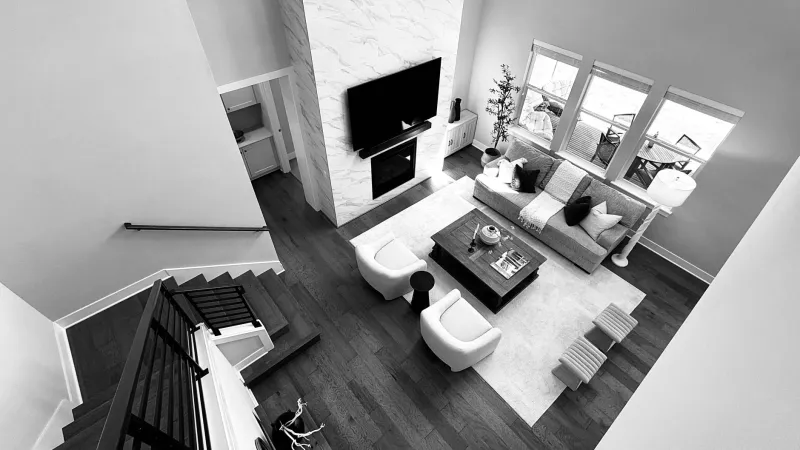
Your 'Do-Everything' Room Is Doing Nothing Well — Here's Why That Has to Change

There's a particular kind of exhaustion that comes from living in a home where every room is pulling double — or triple — duty. The bedroom with the desk shoved in the corner. The dining room that's also the homework station, the craft table, and the Zoom backdrop. The guest room that's technically a gym, except the bike is mostly a very expensive clothes rack.
We've been sold on the idea of flexible, multipurpose spaces as the pinnacle of smart modern living. And look, the intention is good. Real estate in most American cities is expensive. Square footage is precious. Getting more use out of every room sounds like efficiency.
But here's what actually happens: when a room is designed to do everything, it ends up doing nothing particularly well. And that low-grade dysfunction has real costs — to your productivity, your sleep, your mental health, and frankly, your enjoyment of being home.
The Myth of the Flexible Space
The flexible space ideal took off in the early 2010s alongside the rise of open-concept everything and the promise that modern furniture — with its fold-out desks and Murphy beds and modular shelving — could make any square footage work for any purpose at any time.
And then a global pandemic put millions of Americans inside their homes 24 hours a day, and we all discovered the hard way that a bedroom-slash-office is, in practice, a space where you can never fully relax and can never fully focus. The bed is always in your peripheral vision during work calls. The laptop is always visible when you're trying to sleep. Your brain, which is remarkably good at picking up environmental cues, gets confused about what it's supposed to be doing in this room.
This isn't a design opinion. It's neuroscience. The brain uses context — the physical environment you're in — as a powerful cue for behavior and cognitive state. Spaces that send mixed signals produce mixed results. A room that looks like a bedroom and an office simultaneously trains your brain to be neither fully rested nor fully productive in it.
The Hidden Tax of Multitasking Spaces
Beyond the bedroom-office problem, there's a broader pattern worth naming. When a space lacks a clear identity, it tends to accumulate. The dining table that doubles as a workspace becomes the default landing spot for everything that doesn't have another home — mail, bags, chargers, permission slips, last week's Amazon boxes. Clearing it for an actual meal becomes a whole project, which means you eat there less, which means it becomes even more of a dumping ground.
The same thing happens to guest rooms that try to be gyms. Because neither function fully commits to the space, neither gets used properly. The weights are in the way when guests visit. The air mattress is stacked in the corner when you're trying to work out. You end up using neither the room for exercise nor the room for hosting, because the friction of converting it each time is just high enough to make you skip it.
That friction is the hidden tax. It's small every time, but it compounds. And over months and years, it quietly shapes a home that feels like it's working against you rather than for you.
Intentional Zoning Isn't a Luxury — It's How Homes Actually Work
Here's the reframe: defining a clear purpose for each space in your home isn't an indulgence for people with large houses. It's a fundamental principle of livable design, and it applies regardless of square footage.
Even in a studio apartment, the difference between a sleeping zone and a working zone can be as simple as the direction a desk faces, the placement of a room divider, or the use of distinct lighting in each area. The physical boundaries don't need to be walls. They need to be clear enough that your brain reads them as separate contexts.
This is what good layout design actually does: it uses furniture placement, lighting, rugs, and sightlines to create zones that feel distinct and purposeful, even in open or small spaces. A reading chair in the corner of a bedroom, facing away from the desk, with a floor lamp and a small bookshelf, becomes a reading zone. Your brain knows what to do when you sit there. The rest of the room can stay work-adjacent, but that corner is yours for unwinding.
How to Give Your Rooms Back Their Identity
If you're reading this and mentally cataloging every overloaded room in your home, here's where to start:
Name the primary function first. For each room, decide on the one thing it exists to do above all else. Not a list — one thing. Every other function is secondary and should not visually dominate the space.
Let the layout reflect the priority. The furniture arrangement should make the primary function obvious and easy. In a bedroom, the bed should be the focal point, not the desk. In a home office, the work surface should face a wall or window — not the bed.
Create physical separation for secondary uses. If a room genuinely needs to serve two purposes — and sometimes it does — use furniture, rugs, or lighting to make those zones feel visually distinct. A sofa table behind the couch can separate a living zone from a dining zone. A curtain can screen off a home office corner in a bedroom. The goal is for each zone to feel like it belongs somewhere, not like it's apologizing for being there.
Audit the clutter the room is collecting. Rooms without clear identities become catch-alls. If a specific space is accumulating random stuff, that's often a sign it doesn't have a strong enough purpose to push back against the chaos. Defining its function is the first step toward keeping it functional.
The Home You Actually Want to Live In
There's something worth saying about why so many of us end up with rooms that have lost their focus. Life is full, schedules are packed, and the path of least resistance is to add a thing to whatever space has room for it. The yoga mat goes in the guest room because where else would it go. The desk goes in the bedroom because there's no dedicated office.
But the homes that feel the best to live in — the ones that feel genuinely restful and genuinely productive and genuinely welcoming — are the ones where someone made deliberate choices about what each room is for. That intentionality doesn't require a big budget or a big floor plan. It requires being willing to say: this room has a job, and everything in it should support that job.
Flexibility is a fine goal for furniture. It's a poor goal for purpose. Your home works better when it knows what it's doing — and so do you.